


Key Trends in EHR in 2026 Shaping Global Healthcare
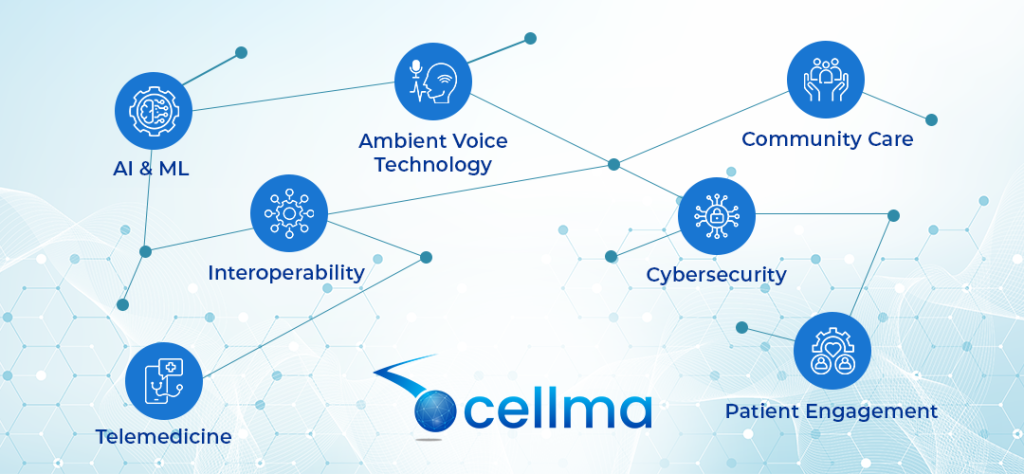
Table of Contents Help Others Discover – Click to Share! Facebook Twitter LinkedIn Table of Contents As global healthcare systems continue to evolve, EHRs and EMRs are transitioning into a next phase by 2026, where simply digitising a record or adhering to government regulations for compliance no longer serves as a metric for success. In the UK, this evolution aligns with the emerging 10-Year Health Plan, which position interoperable, digitally enabled systems as central to future care delivery. What really matters now is how well these systems back up intelligence-led care, connect everything in the healthcare ecosystem, and keep up with the nonstop changes happening in clinical and operational settings. Healthcare data isn’t just growing, it’s exploding. Every year, there’s about 36% more of it, and soon we’ll pass 10 zettabytes. The main reasons? More digital diagnostics, remote monitoring, genomics, and a big push toward virtual care. Electronic health records are everywhere now. Close to 80% of providers around the world have gone digital. In parallel, the UK NHS alone records over 1.6 million patient interactions every day, reflecting the scale at which digital systems must perform. That’s the kind of volume the digital systems need to handle, day in and day out. As 84% of healthcare organisations worldwide see that interoperability is essential in bettering how healthcare is delivered to patients, the 2026 trends in Electronic Health Records (EHRs) indicate a movement away from traditional static record keeping toward adaptive, intelligent health platforms. Global and UK NHS EHR Trends to Watch in 2026 1. Artificial Intelligence and Machine Learning Becoming Core to EHRs AI and machine learning aren’t just buzzwords anymore; they’re quickly turning into the backbone of modern EHRs all over the world. AI is now at the core of the majority of clinical process flows, from predictive risk modelling in North America, through population health analytics in Europe and Asia-Pacific. The NHS in the UK has made it an organisational priority to promote the responsible use of AI. The NHS 10-Year Plan explicitly highlights AI as a critical enabler for early diagnosis, workforce efficiency, and personalised care, supporting its wider shift toward digitally enabled, preventative healthcare. The global healthcare AI marketplace continues to grow as many systems are moving towards utilisation of real-time insights and automation – solidifying AI as a key future component of both EHR and EMR. Why It’s Important Healthcare organisations worldwide produce enormous amounts of data; however, healthcare providers typically do not have sufficient time or tools to analyse and interpret this data effectively. Globally, AI-enabled EHRs assist in providing contextually relevant information, identifying risks in real time and facilitating supportive, proactive and preventive decision-making across multiple aspects of healthcare delivery. For the NHS, this is vital to managing rising demand and workforce pressures while delivering safe, consistent care at scale. Cellma’s Perspective With Cellma’s platform which is built to support global healthcare systems and UK NHS, you can leverage artificial intelligence and machine learning to generate insights from healthcare datasets using smart alerts, analytic tools, and customisable workflows, allowing you to provide data-based patient care with a level of transparency and clinical responsibility. 2. Ambient Voice Technology – Redefining How We Document Clinical Information The explosive growth of ambient voice technology throughout the world has happened due to clinician exhaustion from excessive amounts of documentation. The ambient clinical intelligence and AI voice technologies generated over $1 billion USD in the year 2024, showing strong demand and use throughout the UK NHS, US, Europe and Asia. Studies confirm that clinicians can save between 20 and 50% on time spent documenting and also save up to 70% of the time previously spent documenting beyond their regular working hours. In the UK, NHS guidelines and procurement frameworks encourage and guide clinicians in their efforts to implement ambient voice technology. Many countries have developed similar regulatory structures supporting the development and adoption of ambient voice technology. Why it’s important As reducing the amount of time spent on clinical documentation is an important part of physician wellbeing and patient care, enhanced data quality and enhanced patient care should continue to be the primary goals of all the healthcare systems in the world. For the UK NHS, this is especially important to reduce clinician burnout, protect patient-facing time, and sustain care quality amid rising demand and workforce pressures. Cellma’s Perspective Cellma provides an interface for securely utilizing ambient voice technology as an integral part of the electronic health record (EHR) interoperability process and supports responsible adoption of ambient voice technology while maintaining the patient’s safety and security. 3. The Global Growth of Community and Place-Based Care Models As a result of the global trend toward moving care closer to population centres, place-based or community-led care models are developing rapidly around the world. One example of this direction in the UK is the NHS 10 Year Plan, which outlines plans to implement integrated, place-based healthcare in 42 neighbourhood health hubs throughout England. These neighbourhood health hubs combine primary care, community services, mental health, and prevention into one service within the neighbourhood itself. Similar approaches have emerged across Europe, Australia, and the Asia Pacific region, establishing neighbourhood care as a key contributor to the direction of global EHR Trends in 2026. Why its important Neighbourhood care requires an integrated, digitally supported approach to health records. In order for EPRs to allow for the real-time sharing of individual patient data, multidisciplinary care coordination through shared digital infrastructures, and the analysis of populations at the neighbourhood level, EHRs must not be limited to siloed systems. Silos will impede the efforts of care coordinators to work together effectively, thereby undermining the impact of coordinated care on the entire health system. For the NHS and globally, they support efficient, population-focused care and reduce health inequalities. Seamless electronic patient record integration ensures continuity and safety in virtual care. In the NHS and worldwide, it expands access, improves efficiency, and maintains care quality. Cellma’s Perspective Cellma’s modular and interoperable design supports neighbourhood-based care and virtual wards by enabling shared records, role-based access, and integrated reporting across organisations and care settings. This ensures seamless collaboration, continuity of care, and effective management of patients both in the community and remotely. 4. Interoperability Becoming a Global Baseline Expectation Interoperability is now a universal requirement. All over the world, standards like FHIR are now a must for secure data sharing between different providers, regions, and technologies. In the UK, Integrated Care Systems rely on shared care records, reflecting a broader global push toward connected ecosystems within electronic medical records systems. The NHS 10-Year Plan emphasises interoperability as a cornerstone for connected care, highlighting the integration of the NHS App with EHRs to give patients seamless access to their records, appointments, prescriptions, and care plans. This reflects a broader global push toward fully connected ecosystems within electronic medical records