Connecting India’s Healthcare Operations with Cellma HMIS
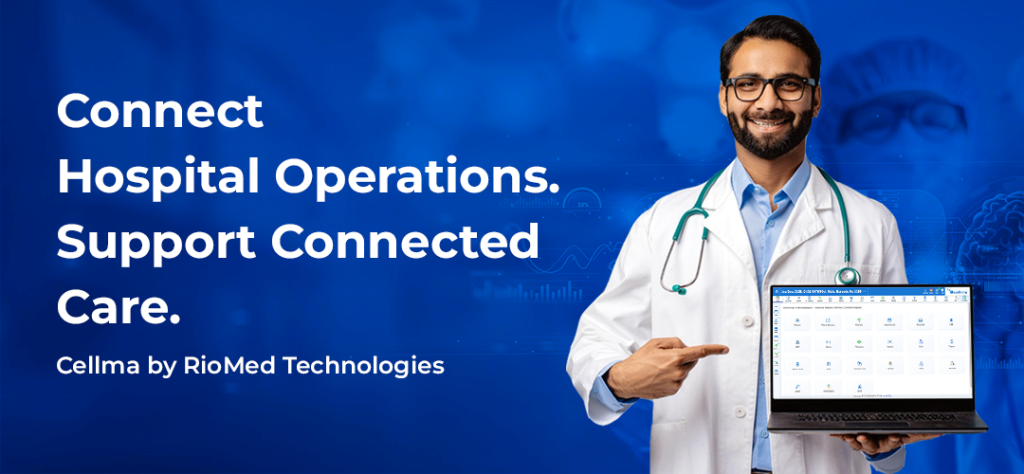
Table of Contents Help Others Discover – Click to Share! Facebook Twitter LinkedIn Table of Contents India’s healthcare sector is undergoing a significant shift towards digital records, connected health services and technology-enabled hospital management. The scale of this change is reflected in the Government of India’s digital health initiatives. As of 20 July 2026, more than 94.87 crore Ayushman Bharat Health Accounts (ABHAs) had been created, alongside 5.36 lakh health facilities registered on the Health Facility Registry and 10.09 lakh healthcare professionals registered on the Healthcare Professionals Registry under the Ayushman Bharat Digital Mission (ABDM). The expansion of digital health records is equally significant. In May 2026, the Ministry of Health and Family Welfare reported that more than 100 crore health records had been linked with ABHA, with over 450 public and private health technology solutions integrated into the ABDM ecosystem. These figures demonstrate the growing adoption of digital health infrastructure across India. However, creating digital health identities and linking records are only parts of a wider digitalisation journey. Hospitals must also manage patient registration, clinical documentation, appointments, admissions, pharmacy, diagnostics, billing and reporting. When these functions operate through separate applications or manual processes, accessing complete information and coordinating departmental activities can become challenging. At RioMed Technologies, we understand that hospitals need more than individual digital tools. They need connected systems that support clinical, administrative and operational workflows. This is why we developed Cellma, an integrated EHR and HMIS platform designed to connect hospital operations and patient information. India’s Growing Digital Healthcare Landscape India’s digital healthcare development is progressing through government-led platforms, hospital information systems and private healthcare technology solutions. Some key developments illustrate the direction of this progress: 94.87 crore ABHA accounts: Created under ABDM as of 20 July 2026, supporting the creation of a nationwide digital health identity framework. 100 crore health records linked: Reported under ABDM in May 2026, reflecting the increasing use of digital health records and consent-based information exchange. 450+ integrated health technology solutions: Public and private digital health solutions had integrated with the ABDM ecosystem by May 2026. More than 1,000 health facilities using eHospital: The National Informatics Centre’s web-based HMIS supports functions including OPD, IPD, emergency, billing, laboratory, radiology, pharmacy and operation theatre management. 80+ government hospitals using e-Sushrut: Developed by C-DAC, the HMIS operates across government hospitals and caters to more than 70,000 patients daily. The Ministry of Health and Family Welfare’s Annual Report 2024–25 also recorded 2.62 lakh health facilities registered on its HMIS, including 2.24 lakh public and 0.38 lakh private facilities. This figure relates to facilities registered for reporting health service delivery and infrastructure data; it should not be interpreted as the number of hospitals using a complete commercial EHR or HMIS platform. As digital healthcare adoption grows, we see an important requirement emerging for hospitals: connecting information and workflows across departments rather than managing them through isolated applications. Our focus with Cellma is to support this need through an integrated healthcare platform. What Is Cellma? Cellma is our integrated Electronic Health Record (EHR) and Hospital Management Information System (HMIS) platform. We bring together patient administration, clinical records, appointments, pharmacy, billing, diagnostics, inpatient services and hospital reporting through one configurable healthcare ecosystem. We designed Cellma to support the management of patient information across different departments and stages of care. Its modular architecture allows us to configure workflows around each healthcare organisation’s operational requirements, specialities and existing technology environment. At RioMed Technologies, we have been developing healthcare technology solutions since 1997. Over more than 27 years, we have built experience across the UK, Ireland, the Caribbean, the Middle East and India. This experience informs how we approach healthcare software, system integration and implementation. With Cellma, we bring clinical and administrative capabilities together so healthcare organisations can manage more of their hospital operations through a connected platform. How Does Cellma Connect Hospital Operations? A patient’s journey involves multiple departments, professionals and care settings. Information captured during registration may be required during consultation, diagnostic investigations, admission, treatment, pharmacy visits and follow-up appointments. When these activities operate through disconnected systems, staff may need to retrieve information from different applications or enter the same details repeatedly. With Cellma, we connect these activities through a shared patient record and integrated modules. Depending on the hospital’s configuration, the patient journey can include: Patient Registration → Appointment Scheduling → OPD Consultation → Investigations → Diagnosis and Treatment → Admission → Pharmacy → Billing → Discharge → Follow-up For example, patient details captured during registration can support subsequent clinical documentation. Healthcare professionals can record consultation notes, diagnoses and prescriptions in the patient’s electronic record. Through integrations, relevant diagnostic information can also be accessed within the wider patient record, while our admission, bed management and billing modules support inpatient operations. This connected approach gives authorised users access to relevant patient and operational information according to their roles and access permissions. Key Cellma Modules for Hospital Management We have developed Cellma with a range of modules to support clinical and administrative functions. Healthcare organisations can use the modules relevant to their requirements and configure workflows around their operational structure. Patient Administration and Scheduling Our patient administration and scheduling capabilities support patient registration, demographic information, appointments, admissions and related administrative activities. Scheduling workflows help coordinate consultations and hospital services. Electronic Medical Records (EMR) With Cellma EMR, we support digital patient records containing medical histories, clinical notes, diagnoses, treatment plans and prescriptions. Specialty-based templates support clinical documentation across different departments and care requirements. Pharmacy Management Our pharmacy management capabilities support prescription management, medication dispensing and pharmacy stock processes. Pharmacy teams can manage medicine information, batches, expiry dates and inventory-related activities. Laboratory and Diagnostic Integration We support connections between Cellma and external laboratory information systems and diagnostic applications. These integrations facilitate the exchange of investigation requests and results, making relevant diagnostic information accessible within the wider patient record. Theatre and OT Management Our theatre and OT management capabilities support surgical workflows, theatre scheduling and related patient information. Clinical and administrative details can