Help Others Discover – Click to Share!
THE STATE OF PLAY: Every Integrated Care System (ICS) in England now delivers virtual ward services – supporting more than 9,000 patients every day.
Healthcare is moving beyond hospital walls. Today, every Integrated Care System (ICS) in England delivers virtual ward services, supporting more than 9,000 patients every day.
Metric | Figure |
Patients supported daily via virtual wards | 9,000+ |
NHS providers with an Electronic Patient Record (EPR) | 93% |
Providers with fully integrated two-way data sharing | 30% |
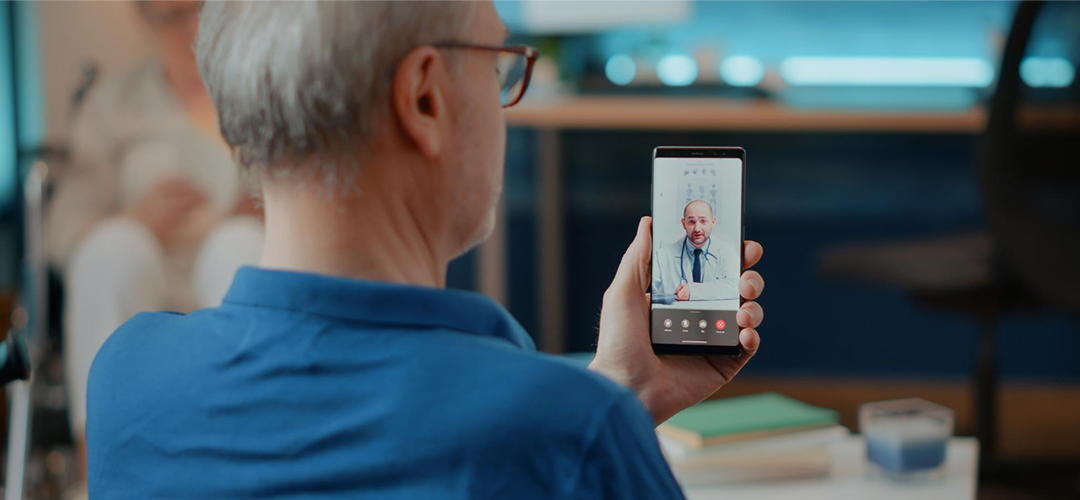
Virtual wards enable hospital-at-home care by supporting early discharge, preventing unnecessary hospital admissions, and allowing patients to receive acute clinical care safely in their own homes through remote monitoring and multidisciplinary support. Yet, while 93% of NHS providers have an Electronic Patient Record (EPR), only 30% have fully integrated two-way data sharing. This disconnect makes it difficult for district nursing and community care teams to access complete patient information, coordinate care, and deliver timely interventions. As more patients expect digital services such as online appointments, virtual consultations, and secure access to their health records, the need for virtual care in community settings has never been greater.
The NHS 10-Year Health Plan supports the trend of moving from hospital treatment towards community and neighbourhood health care, making digital health in community hospitals one of the top priorities. Furthermore, the plan establishes basic goals like the creation of a unified patient record, improved interoperability, and the establishment of more digital wards and services that enhance interaction between hospitals, primary care, and communities.
Obtaining those objectives implies not only having separate digital tools to use but also having an integrated platform for safe and efficient sharing of information between all parties concerned. Cellma is the solution for making the NHS policies real.
As healthcare increasingly moves into homes and local communities, clinicians need instant access to accurate patient information, wherever they are. However, many organisations still rely on disconnected systems that create barriers to efficient care delivery.
Common challenges include:
An integrated digital ecosystem is key in making virtual care effective in communities. Absence of any one part of the ecosystem means increased workload for administrative staff and inability to provide seamless care.
Cellma is advanced EHR technology that provides healthcare facilities with the ability to provide their patients with effective virtual care in the community.
A Single Patient Record
The great advantage of using Cellma is its capability to track changes made in patients’ records while the patients are getting care at home, having virtual consultations or transferring from one medical facility to another. Clinicians across every care setting can securely access the same real-time information, improving communication and continuity of care.
Interoperability That Connects the NHS
Successful virtual care in community settings depends on information flowing seamlessly across organisations. Cellma supports interoperability through:
Standard / System | Purpose |
HL7 FHIR | Two-way data exchange |
Open APIs | Flexible system connectivity |
GP Connect | Primary care data sharing |
Personal Demographics Service (PDS) | Verified patient demographics |
Summary Care Record (SCR) | Shared clinical summary |
Electronic Prescription Service (EPS) | Medication and prescribing data |
Care Identity Service 2 (CIS2) | Secure clinician authentication |
This enables secure data exchange between hospitals, GP practices, community services, laboratories, imaging systems, and multidisciplinary teams, reducing duplication and improving care coordination.
A Patient Portal That Keeps Patients Engaged
Patient engagement is essential for successful virtual care. Cellma’s secure Patient Portal enables patients to:
✓ Book appointments online
✓ Join virtual consultations
✓ Access their health records
✓ View care plans
✓ Complete pre-consultation questionnaires
✓ Receive reminders and notifications
✓ Communicate securely with care teams
With NHS App integration, patients can also access healthcare services through familiar NHS digital channels, creating a more connected experience throughout their care journey.
Smarter Decisions with AI and AVT
Technology should lessen the administrative burden rather than multiply it.
Cellma’s AI Voice Technology (AVT) translates clinical discussions into organized documents in order to free clinicians from spending too much time typing.
Meanwhile, the AI Clinical Decision Support system reviews patient history, reports highlights information at risk, observes trends emerges and provides relevant information enabling a quick decision making in health care.
So, together these innovations help medical practitioners to devote more of their hours to patients rather than administrative work.
Supporting Remote Monitoring and Care Coordination
Virtual care goes beyond video visits. Cellma includes remote monitoring information in the patient’s clinical record, giving care providers access to observations in conjunction with both the patient’s medical history and the medication, assessments, and planned care.
Integrated referrals, structured care pathways, task management, and teamwork ensure that every member of the care team has access to the information on the patient.
Healthcare organisations need technology that not only supports today’s virtual services but is also ready for tomorrow’s NHS. Cellma is designed to meet NHS digital requirements through:
Capability | Category |
HL7 FHIR interoperability | Interoperability |
NHS App integration | Patient engagement |
GP Connect, PDS, SCR, EPS, CIS2 connectivity | Interoperability |
Open APIs | Interoperability |
DTAC compliance | Governance |
DSP Toolkit | Governance |
SNOMED CT | Clinical coding |
UK GDPR | Data protection |
Cyber Essentials Plus | Security |
AI Voice Technology (AVT) | AI / automation |
AI-powered Clinical Decision Support | AI / automation |
Secure Patient Portal | Patient engagement |
These capabilities provide the digital foundation needed to scale virtual care in community settings while supporting integrated, secure, and patient-centred healthcare.
The future of healthcare relies heavily on connected information, empowered patients, and intelligent technology. As the NHS pursues its comprehensive transformation towards community-first care, organizations need answers that will allow the development of seamless interaction, clinical decision-making, and patient involvement.
Cellma brings together interoperability, virtual consultations, remote monitoring, AI-powered clinical support, AVT, a secure Patient Portal, and one connected patient record to help healthcare providers deliver safer, smarter virtual care in community settings.
Ready to Deliver Connected Virtual Care?
Discover how Cellma can help your organisation transform virtual care in community settings with one intelligent, NHS-ready platform.
Recent Blogs
Let’s transform healthcare together. Speak with RioMed for a tailored solution.
Cellma supports virtual care in community settings by providing a single, connected Electronic Health Record (EHR) that enables virtual consultations, remote monitoring, integrated care planning, and secure information sharing. With HL7 FHIR interoperability, AI-powered Clinical Decision Support, AI Voice Technology (AVT), and a secure Patient Portal, Cellma helps clinicians deliver coordinated, patient-centred care across hospitals, community services, and patients' homes.
Yes. Cellma is designed to integrate seamlessly with the NHS digital ecosystem. It supports HL7 FHIR, GP Connect, Personal Demographics Service (PDS), Summary Care Record (SCR), Electronic Prescription Service (EPS), Care Identity Service 2 (CIS2), Open APIs, and NHS App integration. These integrations enable secure data sharing and improve collaboration across primary, acute, and community care settings.
Cellma includes a secure Patient Portal that allows patients to book appointments, access their health records, join virtual consultations, view care plans, complete pre-consultation questionnaires, and communicate securely with healthcare teams. Combined with NHS App integration, it helps patients stay informed, engaged, and connected throughout their care journey.