Help Others Discover – Click to Share!
THE WAITING LIST PROBLEM: 90,049 patients were waiting more than 52 weeks for community services in January 2026 – 32.7% more than the 67,879 recorded in January 2025.
90,049 patients were waiting more than 52 weeks for community services in January 2026 – 32.7% more than the 67,879 recorded in January 2025. 90% of these waits were in children’s services, with 82% concentrated in community paediatrics.
The pressure points, at a glance:
Metric | Figure |
Patients waiting 52+ weeks (Jan 2026) | 90,049 |
Increase vs. January 2025 | +32.7% |
Share of waits in children’s services | 90% |
Share concentrated in community paediatrics | 82% |
Discharge-ready patients facing a delay (Mar 2025) | ~6 in 10 |
Community mental health users who waited too long | 40% |
Waited 3+ months for first mental health treatment | 33% |
Reported mental health deterioration while waiting | 42% |
Adult social care waiting list (Mar 2025) | 372,000 |
Growth in doctor numbers (5 years) | +24% |
Growth in nurse numbers (5 years) | +22% |
These numbers tell a clear story: community care is under pressure, and disconnected systems can make that pressure harder to manage. This is where Cellma comes in, connecting patient records, clinical teams, referrals, appointments and patient-facing digital services to support care beyond the hospital.
Cellma’s approach also aligns with community rehabilitation and the NHS 10-Year Health Plan. Its three shifts – hospital to community, analogue to digital, and sickness to prevention, place greater emphasis on care delivered closer to home and supported by connected digital services. Neighbourhood health centres are expected to bring services such as rehabilitation, post-operative care, diagnostics and primary care together, while the NHS App is becoming an important digital front door for appointments, communication, advice and care planning.
For community teams, moving care out of hospital must therefore be matched by moving information with the patient. With doctor numbers up 24% and nurse numbers 22% over five years, digital systems can also help teams make better use of clinical capacity while demand continues to rise.
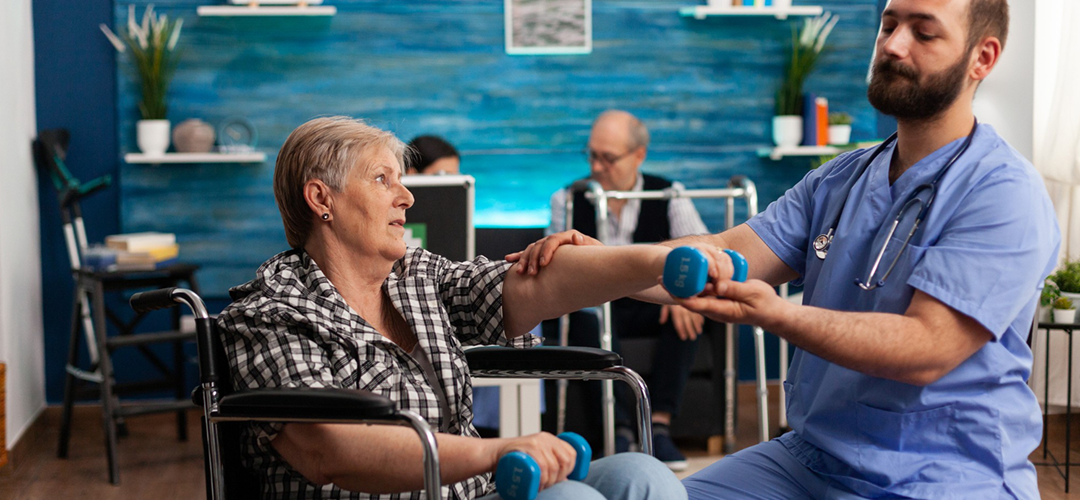
For many patients, leaving hospital is not the end of treatment, it is the beginning of another stage of recovery. A patient recovering from a neurological condition, for example, may move between physiotherapy at home, occupational therapy at a community hub, speech and language therapy, GP reviews and social care support.
Community Rehabilitation brings together this wide range of services, including:
But the journey can quickly become complicated. Referrals may sit in one system, clinical notes in another, appointments in a third, while information is passed between teams through phone calls, emails or manual updates. A therapist needs the patient’s acute history. A community clinician needs to coordinate with social care. The patient needs to understand what happens next. Service managers need visibility of caseloads, waiting lists and capacity. When information is fragmented, continuity becomes harder, exactly when patients need it most.
The pressure is not limited to adult services. Children and young people face long waits for therapy and neurodevelopmental assessment, while adult services contend with rising demand, workforce shortages and limited capacity. Adult social care waiting lists, which feed directly into rehabilitation and reablement pathways stood at an estimated 372,000 in March 2025. Delays can affect recovery, independence, return to work or school, and the wellbeing of carers.
MENTAL HEALTH REHABILITATION: The CQC found that 40% of community mental health service users felt their wait was too long, 40% received no support while waiting, and 42% reported deterioration.
Digital care cannot replace clinical capacity, but connected records, patient portals and digital communication can help teams coordinate care and keep patients engaged between appointments.
The direction for Community Rehabilitation is clear. The Better Care Fund is being reformed for 2026/27 to strengthen integrated services across discharge, intermediate care, rehabilitation and reablement. It also tracks how many people aged 65+ remain in the community 12 weeks after discharge into reablement, alongside a 4.4% uplift in NHS adult social care contributions. The goal is not simply faster discharge but coordinated support at home.
Mental health is part of this shift, with plans for 24/7 open-access centres integrating crisis, community, rehabilitation and inpatient care. An initial rollout begins in 2026/27, supported by up to £120 million for dedicated mental health emergency departments.
Meanwhile, NICE NG252, published in October 2025, calls for person-centred, lifelong and integrated rehabilitation across hospitals, communities and homes. It emphasises coordinated care, stronger cross-sector collaboration, emotional and cognitive wellbeing, social participation and local workforce development.
KEY TAKEAWAY: Modern community rehabilitation needs a digital record that follows the patient, not the building.
As an integrated EPR/HIMS platform, Cellma brings patient administration, clinical documentation, referrals, appointments, care plans, communications and reporting into one connected environment. Instead of adding another standalone tool to an already complex pathway, Cellma connects the clinical and operational sides of care, giving community and rehabilitation teams a digital foundation that can support the patient journey from hospital to home and beyond.
One Patient Record Across the Care Journey
A single patient record helps connect acute, community and other care settings around the same person. Clinicians can access relevant information rather than relying on disconnected documents, supporting continuity as patients move between hospital, home, community hubs and step-down services.
For rehabilitation teams, this can support the full pathway from referral and assessment through goal setting, intervention, review, discharge and follow-up.
Interoperability for Connected NHS Care
Cellma supports open APIs and interoperability standards including HL7 and FHIR R4, helping healthcare organisations exchange information with other clinical systems, laboratories, imaging platforms and health information environments.
Its NHS integration capabilities include CIS2, PDS, GP Connect, Summary Care Record, EPS and NHS e-RS, supporting identity, information sharing, prescribing and referral workflows. Cellma also supports clinical coding standards including SNOMED CT, ICD-10, ICD-11 and dm+d.
This matters because the patient journey rarely starts or ends inside one service. A referral may originate in primary care, treatment may begin after an acute admission, rehabilitation may continue at home, and social care or voluntary-sector support may become part of the plan. Interoperability helps connect those stages rather than leaving each service to work in isolation.
A Patient Portal That Keeps Care Moving
Rehabilitation is not something that only happens during a clinician’s appointment. Much of the work happens between visits, following a programme, completing questionnaires, communicating concerns, reviewing information and staying on track with goals.
Cellma’s patient-facing capabilities can provide secure access to appointments, communications, relevant records and digital interactions, helping patients and carers stay involved in their care.
Combined with NHS App integration, this supports the NHS direction towards digital access to appointments, communication and care planning. For patients receiving care at home or in community settings, digital access can make it easier to stay connected between face-to-face appointments and reduce reliance on avoidable phone calls and manual administration.
Digital Workflows for Teams Working Across Locations
Community clinicians do not always work from one desk. They move between homes, clinics, hubs and other care settings. A web-based platform can give authorised staff access to the information and workflows they need wherever care is delivered.
Cellma can support appointment management, referral workflows, clinical documentation, automated communications, care coordination and reporting, helping teams maintain visibility across distributed caseloads.
Voice-to-text capabilities and AI-enabled features can support documentation and administrative workflows, while dashboards and business intelligence give managers greater visibility of demand, activity, waiting lists and performance.
Supporting Multidisciplinary Teams
A rehabilitation pathway can involve physiotherapists, occupational therapists, speech and language therapists, nurses, doctors, social care professionals, mental health teams and other specialists. Cellma brings clinical information and workflow into a shared environment, supporting multidisciplinary collaboration rather than isolated service records.
This is particularly relevant to NG252, which emphasises integrated pathways, coordination, case management and collaboration across settings.
Security, Compliance and Accessibility
Digital community care must be connected without compromising patient confidentiality. Cellma supports security and governance requirements including GDPR, the Data Protection Act 2018, the NHS Data Security and Protection Toolkit, ISO-aligned security practices, encryption and multi-factor authentication.
Accessibility matters too. Cellma’s roadmap includes WCAG 2.2 AA compliance, supporting the wider NHS ambition for inclusive digital access.
The challenges facing community rehabilitation are familiar: growing waiting lists, fragmented referrals, limited workforce capacity, delayed discharges, multiple providers and patients who need support outside traditional appointments. Cellma tackles these challenges by connecting information, workflows and people across the pathway.
Who | How Cellma helps |
Clinicians | A shared record provides relevant patient information in one place, supporting informed decisions across settings |
Service managers | Dashboards and reporting provide visibility of caseloads, waiting lists, activity and demand |
Patients and carers | Patient-facing digital services keep appointments, information and communication within easier reach |
Integrated care teams | Open APIs and NHS interoperability capabilities help information move across organisational boundaries |
The wider system | Better-connected pathways support the hospital-to-community shift by giving services the digital infrastructure needed to coordinate care closer to home |
The future of rehabilitation is increasingly taking place beyond hospital walls, in homes, neighbourhood centres, community clinics and step-down settings. As care moves outward, the digital record must move with it.
Cellma provides that connected foundation: an integrated EPR with interoperability, patient-facing digital services, NHS integrations, clinical documentation, referral and appointment workflows, reporting, AI-enabled capabilities and security built for healthcare environments.
When patients, clinicians and care teams can work from connected information, community rehabilitation becomes more than a series of appointments. It becomes a coordinated journey where information follows the patient, clinicians can see what matters, and patients can stay connected to their care.
Ready to Build a More Connected Community Care Pathway?
Book a free demo of Cellma and see how digital integration can support your rehabilitation services.
Recent Blogs
Let’s transform healthcare together. Speak with RioMed for a tailored solution.
Cellma connects patient records, referrals, appointments, clinical documentation, care plans and reporting in one integrated platform, helping rehabilitation teams coordinate care across hospitals, community settings and patients' homes.
Yes. Cellma provides a shared digital environment for physiotherapists, occupational therapists, speech and language therapists, nurses, doctors and other professionals, helping teams access relevant patient information and coordinate care across the rehabilitation pathway.
Cellma's patient-facing digital capabilities support access to appointments, communications, relevant health information and digital interactions. This helps patients and carers stay connected with their care between appointments, particularly when rehabilitation is delivered at home or in community settings.